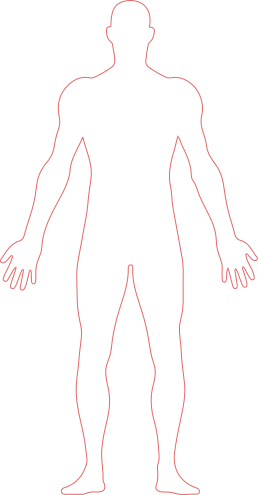
Click on the body parts or the list below to find out more about your pain and how physical therapy can help.
A herniated or bulging disc occurs when one of the discs between the spinal vertebrae changes shape or extends beyond its usual boundaries. While disc changes do not always cause symptoms, they can sometimes contribute to neck or back pain and may irritate nearby nerves, causing pain, numbness, tingling, or weakness.
How Physical Therapy Can Help:
Physical therapy can help reduce symptoms, restore movement, and gradually rebuild strength and confidence. Treatment may include individualized exercises, manual therapy, education, activity modification, and progressive strengthening to support long-term spinal health and return to normal activities.
Vertigo is the sensation that you or your surroundings are moving or spinning when no actual movement is occurring. Dizziness may have several causes, including problems within the inner ear and vestibular system, with Benign Paroxysmal Positional Vertigo (BPPV) being a common cause.
How Physical Therapy Can Help:
Vestibular physical therapy uses specialized assessment and treatment techniques to determine the source of symptoms. Depending on the diagnosis, treatment may include repositioning manoeuvres, balance training, gaze-stabilization exercises, and vestibular rehabilitation to reduce dizziness and improve confidence with movement.
Temporomandibular disorders affect the jaw joint and/or surrounding muscles and may cause jaw pain, clicking, stiffness, headaches, facial discomfort, or difficulty opening and closing the mouth.
How Physical Therapy Can Help:
Physical therapy can address both the jaw and associated neck dysfunction through manual therapy, targeted exercises, muscle relaxation techniques, posture and movement retraining, and education. Treatment aims to reduce pain, improve jaw mobility, and restore comfortable chewing and everyday function.
Degenerative disc disease describes age-related changes that occur in the discs of the spine. Despite its name, it is not necessarily a progressive “disease,” and many people have disc degeneration without experiencing pain. When symptomatic, it may contribute to stiffness, neck or back pain, and occasionally nerve-related symptoms.
How Physical Therapy Can Help:
Physical therapy focuses on maintaining mobility, improving strength and spinal control, managing symptoms, and keeping you active. An individualized exercise program can improve your ability to perform everyday activities while reducing the impact of recurring symptoms.
Cervical radicular pain occurs when a nerve root in the neck becomes irritated, producing pain that travels into the shoulder, arm, or hand. Cervical radiculopathy may additionally involve neurological changes such as numbness, weakness, altered sensation, or reduced reflexes.
How Physical Therapy Can Help:
Treatment may include cervical and thoracic mobility techniques, carefully selected exercises, neural mobilization, strengthening, education, and cervical traction when appropriate. Rehabilitation aims to reduce symptoms, restore function, and gradually return patients to normal activities.
Address
Phone
© 2026 Flexx Physiotherapy. All rights reserved.