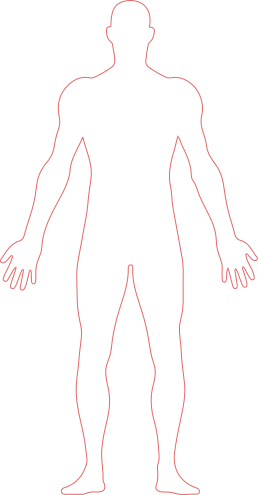
Click on the body parts or the list below to find out more about your pain and how physical therapy can help.
Frozen shoulder is a painful condition in which the tissues surrounding the shoulder joint become inflamed, stiff, and restricted, resulting in a gradual loss of movement. Everyday activities such as reaching overhead, dressing, or sleeping comfortably can become difficult.
How Physical Therapy Can Help:
Physical therapy helps reduce pain, gradually restore shoulder mobility, and improve strength and function. Treatment may include gentle joint mobilization, stretching, progressive strengthening, pain-management techniques, and a personalized home exercise program. Treatment is carefully progressed according to the stage of the condition to help you safely regain comfortable, functional movement.
A rotator cuff injury affects one or more of the muscles and tendons responsible for stabilizing and moving the shoulder. Injuries can range from irritation and tendinopathy to partial or complete tears, causing pain, weakness, and difficulty reaching or lifting.
How Physical Therapy Can Help:
Physical therapy focuses on reducing pain, restoring shoulder mobility, and progressively strengthening the rotator cuff and surrounding muscles. Treatment may include targeted exercises, manual therapy, activity modification, and gradual return to work, exercise, or sport.
Shoulder impingement, often referred to more broadly as subacromial pain syndrome, causes pain around the shoulder, particularly when lifting the arm overhead. Symptoms may develop from irritation of the rotator cuff tendons or surrounding structures and can be influenced by strength, mobility, and activity demands.
How Physical Therapy Can Help:
Physical therapy uses progressive strengthening, movement retraining, mobility exercises, and education to improve shoulder function and increase its ability to tolerate everyday and sporting activities.
Shoulder instability occurs when the shoulder joint does not remain adequately controlled within its socket. It may develop following a traumatic dislocation or gradually due to increased joint laxity, repetitive activity, or impaired muscular control.
How Physical Therapy Can Help:
Rehabilitation focuses on improving rotator cuff and shoulder blade strength, joint control, proprioception, and functional stability. Treatment is progressively tailored to help patients regain confidence during everyday activities, work, and sport while reducing the risk of recurrent instability.
Shoulder osteoarthritis occurs when changes within the joint—including deterioration of the cartilage and underlying bone—lead to pain, stiffness, and reduced movement. Symptoms can make reaching, lifting, dressing, and other everyday activities increasingly difficult.
How Physical Therapy Can Help:
Physical therapy cannot reverse osteoarthritis, but it can help manage symptoms and maintain function. Treatment focuses on improving joint mobility, strengthening the surrounding muscles, managing pain, and developing an individualized exercise program to help patients remain active and independent.
Rotator cuff repair surgery reconnects a torn rotator cuff tendon to the bone. Rehabilitation following surgery is essential to protect the healing tendon while gradually restoring shoulder movement, strength, and function.
How Physical Therapy Can Help:
Physical therapy follows a carefully structured progression based on tissue healing and the surgeon’s protocol. Rehabilitation typically progresses from protected movement and mobility to strengthening and eventually functional or sport-specific activities, helping patients safely return to their normal activities.
The shoulder labrum is a ring of cartilage surrounding the socket that contributes to shoulder stability. A labral tear may result from trauma, repetitive overhead activity, dislocation, or gradual degeneration and can cause pain, clicking, catching, weakness, or feelings of instability.
How Physical Therapy Can Help:
Physical therapy can help many patients manage labral injuries without surgery by improving shoulder stability, rotator cuff and scapular strength, movement control, and tolerance to activity. Following surgical repair, rehabilitation is carefully progressed to protect the healing tissue before gradually restoring mobility, strength, and function.
Address
Phone
© 2026 Flexx Physiotherapy. All rights reserved.