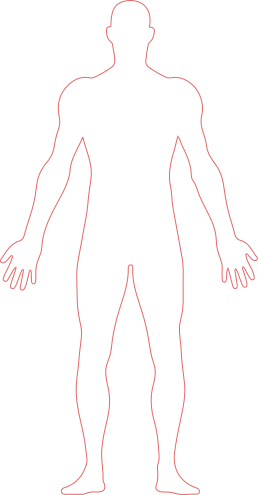
Click on the body parts or the list below to find out more about your pain and how physical therapy can help.
Tennis elbow is an overuse condition affecting the tendons on the outside of the elbow, commonly associated with repetitive gripping, lifting, or wrist movements. Despite its name, you don’t have to play tennis to develop it. Symptoms typically include outer elbow pain, tenderness, and reduced grip strength.
How Physical Therapy Can Help:
Physical therapy focuses on progressively strengthening the wrist and forearm muscles, improving load tolerance, and modifying aggravating activities. Treatment may also include manual therapy, education, taping or bracing, and a gradual return to work, sport, and everyday activities.
Golfer’s elbow affects the tendons on the inside of the elbow and commonly develops from repetitive gripping, wrist flexion, throwing, or other activities that repeatedly load the forearm muscles.
How Physical Therapy Can Help:
Physical therapy uses progressive strengthening and load management to improve tendon capacity and reduce symptoms. Manual therapy, stretching, activity modification, and technique or ergonomic adjustments may also be incorporated to support recovery and reduce recurrence.
An elbow sprain occurs when one or more of the ligaments supporting the elbow joint are overstretched or torn, usually following a fall, sudden twisting injury, sporting incident, or elbow dislocation. Symptoms may include pain, swelling, stiffness, bruising, and feelings of instability.
How Physical Therapy Can Help:
Following appropriate protection and healing, physical therapy helps restore elbow mobility, strength, stability, and function. Rehabilitation progresses from controlled movement to strengthening and functional exercises, with sport-specific training incorporated when required.
Cubital tunnel syndrome occurs when the ulnar nerve becomes irritated or compressed around the inside of the elbow. It can cause numbness or tingling in the ring and little fingers, elbow discomfort, hand weakness, and difficulty with gripping or fine motor activities.
How Physical Therapy Can Help:
Physical therapy may include activity and ergonomic modification, ulnar nerve mobilization, exercises to address strength and mobility impairments, and education to reduce prolonged or repetitive elbow positions that aggravate the nerve. More significant or progressive neurological symptoms may require further medical or surgical assessment.
Address
Phone
© 2026 Flexx Physiotherapy. All rights reserved.