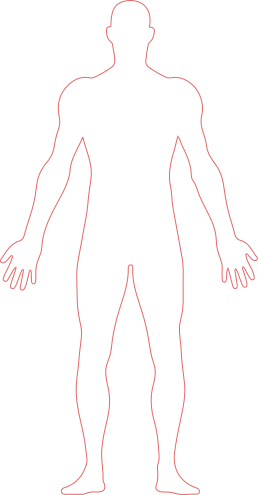
Click on the body parts or the list below to find out more about your pain and how physical therapy can help.
Lateral hip pain refers to discomfort on the outside of the hip, commonly associated with gluteal tendon irritation and sometimes referred to as Greater Trochanteric Pain Syndrome (GTPS). Pain may be aggravated by walking, climbing stairs, lying on the affected side, or prolonged standing.
How Physical Therapy Can Help:
Physical therapy focuses on gradually strengthening the gluteal muscles and improving the hip’s ability to tolerate load. Treatment may include progressive exercise, activity modification, education, movement retraining, and manual therapy when appropriate to reduce pain and restore comfortable movement.
Hip osteoarthritis involves changes to the cartilage, bone, and other structures of the hip joint. It can cause pain, stiffness, reduced mobility, and difficulty with activities such as walking, climbing stairs, putting on shoes, or getting in and out of a chair.
How Physical Therapy Can Help:
Physical therapy can help maintain joint mobility, improve hip and lower-limb strength, reduce symptoms, and improve everyday function. Individualized exercise, education, activity modification, and weight-management support when appropriate can help patients remain active and independent.
Piriformis syndrome describes symptoms associated with irritation of the sciatic nerve in the deep gluteal region, potentially involving the piriformis muscle. It may cause buttock pain with symptoms extending into the back of the thigh or leg.
How Physical Therapy Can Help:
Physical therapy helps identify and address contributing factors through targeted strengthening, mobility exercises, neural mobilization, movement retraining, and activity modification. Manual therapy may also be incorporated to help manage pain and restore comfortable movement.
Hip replacement surgery replaces damaged portions of the hip joint with artificial components to relieve pain and improve function. Rehabilitation is an important part of recovery following both total and partial hip replacement.
How Physical Therapy Can Help:
Physical therapy helps patients safely regain mobility, strength, balance, and independence following surgery. Rehabilitation progresses from walking and basic daily activities to strengthening, balance training, and more demanding functional activities based on the individual’s recovery and surgical precautions.
Femoroacetabular impingement (FAI) occurs when the shape of the hip joint contributes to abnormal contact between the femur and acetabulum during certain movements. It may cause groin or hip pain, stiffness, clicking, and discomfort during squatting, sitting, running, or sporting activities.
How Physical Therapy Can Help:
Physical therapy focuses on improving hip and trunk strength, movement control, mobility where appropriate, and modifying activities that provoke symptoms. Progressive rehabilitation can help improve function and allow many patients to return comfortably to exercise, work, and sport.
Proximal hamstring tendinopathy is an overuse condition affecting the hamstring tendon near its attachment at the sitting bone (ischial tuberosity). It commonly causes deep buttock pain during running, prolonged sitting, lunging, or activities that heavily load the hamstrings.
How Physical Therapy Can Help:
Physical therapy uses progressive tendon-loading exercises to gradually rebuild hamstring strength and capacity. Rehabilitation may also include activity modification, hip and trunk strengthening, movement retraining, and a carefully progressed return to running or sport.
A muscle strain occurs when muscle fibers are overstretched or partially torn, often during sudden acceleration, sprinting, kicking, changing direction, or other demanding activities. Strains around the hip commonly involve the gluteal muscles, hip flexors, or groin/adductor muscles.
How Physical Therapy Can Help:
Physical therapy guides the injured muscle through progressive healing and loading. Treatment typically includes pain management, gradual restoration of mobility, progressive strengthening, and eventually power, agility, and sport-specific exercises to restore performance and reduce the risk of reinjury.
Address
Phone
© 2026 Flexx Physiotherapy. All rights reserved.